Resting Green Frog. Happy Animal Charact
A cheerful little frog—just right for stitching with soul
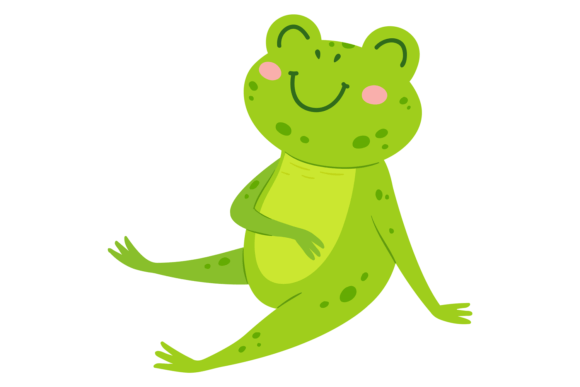
First glance at Resting Green Frog. Happy Animal Charact lands like a soft hop: round, calm, gently smiling, sitting upright with quiet confidence. It’s not cartoon-exaggerated or overly stylized—it’s approachable, warm, and quietly expressive. The clean silhouette, minimal internal detail, and balanced proportions make it feel instantly embroiderable. As an experienced designer who’s stitched everything from nursery quilts to boutique aprons, I immediately saw its potential—not as a generic clipart filler, but as a character with personality that holds up in thread.
Where this frog finds its best home
I recently tested Resting Green Frog. Happy Animal Charact on a custom organic cotton tote bag for a local children’s bookstore—a small-batch order where charm and clarity mattered more than complexity. Stitched at 3.5" wide with medium-density fill and satin-stitched eyes, the frog held its shape beautifully. Its rounded form translated cleanly into stitch, with no jagged edges or awkward transitions. That simplicity is its strength: it works equally well on a baby onesie (soft pastel greens, gentle tension), a linen tea towel (crisp running-stitch outline + subtle fill), or a denim patch sewn onto a backpack. For Etsy sellers and craft fair vendors, this is the kind of machine embroidery design that reads clearly in product photos—and feels handmade without looking amateurish.
What makes it reliable across real projects
- Embroidery file flexibility: The included transparent PNG and SVG mean you can scale it cleanly for both small hoop applications (like a cap front or pocket patch) and larger placements (pillow covers, sweatshirt backs). EPS adds vector precision if you’re prepping for digitizing adjustments.
- Stitch-friendly anatomy: No thin legs to vanish in fill stitch, no tiny nostrils or whiskers that’ll blur under thread. The eyes are distinct but generous—easy to render in satin stitch without puckering. The smile is smooth, not fussy—no risk of “stitch bleed” on curved lines.
- Brand-safe warmth: It’s joyful without being cutesy, green without being botanical, friendly without being saccharine. That balance helps small shop owners maintain consistent tone across embroidered aprons, holiday gift tags, and printable mockups—especially when paired with neutral typography or earthy thread palettes.
Use with care—where simplicity meets reality
While Resting Green Frog. Happy Animal Charact shines on stable, medium-weight fabrics like cotton twill, canvas, or midweight knits, tread thoughtfully on trickier surfaces. On stretchy fabric (think ribbed baby bodysuits), use cutaway stabilizer and reduce stitch density slightly—its solid body can pull if tension isn’t dialed in. On dark fabric, test thread contrast first: a light mint or sage green may disappear; a deeper forest or olive pops better. And avoid placing it directly over seams or curved areas like cap crowns unless you’ve verified hoop clearance—the upright posture means less natural contouring than a sideways critter would allow.
Why customers pause—and smile—when they see it
This isn’t just decoration. In my experience, Resting Green Frog. Happy Animal Charact triggers micro-moments of recognition: a parent pointing it out to their toddler, a teacher choosing it for a classroom reward patch, a bride selecting it for eco-themed wedding favors. Its stillness reads as grounded, its expression as kind—not demanding attention, but inviting connection. That translates directly to perceived value in finished products. A sweatshirt with this frog doesn’t feel mass-produced; it feels chosen. That matters for handmade product credibility, especially for Etsy sellers building trust through authenticity rather than volume.
Practical notes every embroidery designer should check
- Always test on scrap fabric first—especially if using textured linen or terry cloth. See how the frog’s base sits; does it lift or sink?
- Review stitch density before scaling beyond 4". Overly dense fills can overwhelm small details like the smile curve.
- Confirm hoop size compatibility. Its clean isolation means it adapts well—but double-check your smallest hoop if planning baby embroidery or cap fronts.
- Inspect corners and curves in black-and-white mockups. Does the shape retain legibility at thumbnail size? (It does—another quiet win.)
- Match thread colors to fabric behavior, not just screen previews. A glossy green thread on matte cotton reads differently than on brushed poly.
- Verify licensing before listing finished items or digital embroidery files. Since it’s categorized as Illustrations and Graphics, confirm whether commercial use is granted for your specific business model—especially for craft business resale or digital product bundles.
Not just another animal graphic—it’s a design partner
What sets Resting Green Frog. Happy Animal Charact apart isn’t novelty—it’s quiet reliability. It doesn’t shout. It doesn’t overcomplicate. It simply belongs: on a kitchen towel beside a mug, on a child’s backpack strap, on a holiday ornament nestled in handmade wrapping paper. For embroidery designers juggling client deadlines, small shop owners curating cohesive collections, or hobbyists stitching gifts with intention—this is the kind of digital embroidery file that saves time while elevating perception. It stitches true, photographs well, and carries emotional weight without needing explanation. In a world of noisy, overdesigned assets, sometimes the most effective embroidery project starts with a single, steady, smiling frog.