Baby Animal SVG Graphics & Illustrations
First Impressions: Soft, Friendly, and Thoughtfully Minimalist
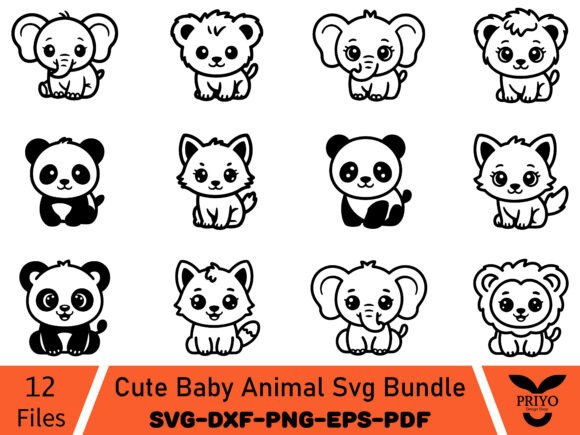
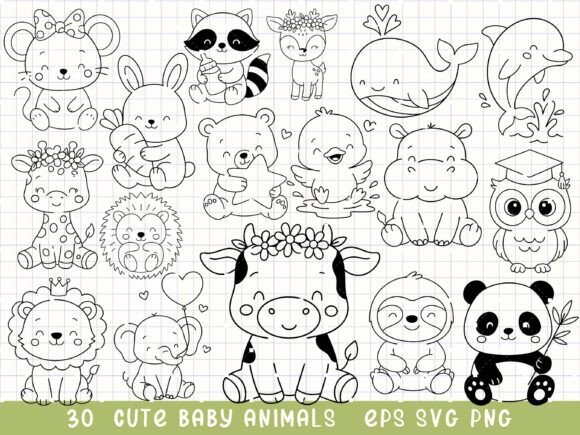
As a brand designer who’s developed identities for over 20 local businesses—from artisanal candle studios to organic baby skincare lines—I opened Baby Animal SVG, Cute Animal Clipart expecting charm, but was genuinely struck by its restrained warmth. 😊 This isn’t cloying or cartoonish; it’s a collection of 30 hand-drawn baby animals rendered with quiet confidence—clean linework, gentle curves, and intentional negative space. The mood is tender, approachable, and quietly confident—ideal for brands that value authenticity over flash. It reads as handmade, organic, and softly modern—not overly feminine, not aggressively playful, but emotionally resonant. Think: a small-batch oat milk latte label with a sleeping fawn icon, or a lavender-scented baby balm jar featuring a curled-up bunny in crisp black on matte kraft paper.
Where It Elevates Real Local Business Branding
This graphic design asset shines when integrated into tangible, customer-facing touchpoints—not just digital mockups, but real-world applications. For a handmade soap business launching a “Woodland Whispers” seasonal line, these illustrations became the cornerstone of packaging design: stamped onto linen labels, laser-etched onto wooden hang tags, and scaled down for subtle watermarking on thank-you cards. A children’s boutique used them across price lists (paired with clean sans-serif type), window decals (cut from vinyl using the SVG paths), and Instagram Story highlights—creating instant visual cohesion without sacrificing legibility.
- Product labels: Works beautifully as a primary icon beside product names—especially on apothecary-style jars or compostable pouches.
- Packaging accents: Adds warmth to otherwise minimal boxes or mailers without overwhelming the structure.
- Social media graphics: Scales flawlessly for carousel posts, Reels thumbnails, and Pinterest pins—no pixelation, no loss of detail.
- Printable design & promotional ads: Ideal for farmers’ market flyers, boutique loyalty cards, or limited-edition gift wrap.
- Seasonal campaign visuals: Easily recolored to match spring pastels, autumn earth tones, or winter monochrome palettes.
Why It Strengthens Customer Trust & Shelf Appeal
In crowded local markets—like a downtown gift shop or specialty food hall—consistency and clarity are trust signals. Using Baby Animal SVG, Cute Animal Clipart across packaging design, website banners, and in-store signage creates stronger first impressions and better product recognition. Because each illustration shares the same minimalist language, customers subconsciously register your brand as intentional and professional—even before reading a word. That visual hierarchy also improves scanability: a busy mom spotting “baby-safe chamomile balm” on a shelf instantly connects the illustrated lamb icon with gentleness and care. That emotional connection translates directly to perceived value—and willingness to pay a premium.
Smart Usage Zones vs. Caution Zones
Baby Animal SVG, Cute Animal Clipart excels in hero graphics, decorative brand elements, and soft-accented packaging—but it’s not universally flexible. Use it confidently on:
- Product mockups (especially for eco-friendly or handmade goods)
- Boutique visuals (window clings, tissue paper stamps, receipt tape)
- Social media campaign graphics (especially for baby, wellness, or nature-aligned niches)
- Thank-you cards and printable inserts (its clean lines reproduce crisply on home printers)
- Seasonal packaging (e.g., Easter-themed cookie tins or autumnal baby milestone kits)
Use carefully—or avoid—in contexts where clarity, formality, or extreme minimalism is non-negotiable: legal disclaimers on food labels, luxury skincare branding with strict monochrome guidelines, ultra-small ingredient panels, or any layout where decoration competes with critical text. Also avoid low-contrast backgrounds (e.g., light gray on off-white)—test every application in grayscale first.
Practical Brand Designer Notes You Can’t Skip
Before committing this graphic design asset to client work or physical production, run these checks:
- Test it on real packaging mockups—not just screen previews—to assess scale, spacing, and tactile impact.
- Check black-and-white usage: does the linework hold up in single-color print? (It does—thanks to deliberate stroke weight.)
- Preview it at actual label size (e.g., 0.75” tall) to confirm readability and proportion.
- Test it with your brand colors: overlay on kraft, ivory, sage, and charcoal substrates to see how contrast shifts.
- Compare against competitor packaging—does it feel distinct yet category-appropriate?
- Verify print quality: export SVGs to high-res PNGs at 300 DPI and inspect edges for anti-aliasing artifacts.
- Review transparency: PNG files render cleanly on colored backgrounds—no haloing.
- Inspect vector editability: SVGs allow easy stroke adjustments, color swaps, and path simplification—essential for customizing per product line.
- Test typography pairings: it harmonizes with serif (e.g., Playfair Display), sans-serif (e.g., Inter), script (e.g., Pacifico), and handwritten fonts—but avoid overly ornate display fonts that clash with its calm precision.
- Confirm commercial licensing: ensure your license covers physical product sales, social media use, and client deliverables—this is non-negotiable for small business branding and commercial design.
A Final Word for Creative Entrepreneurs
Baby Animal SVG, Cute Animal Clipart isn’t just clipart—it’s a strategic visual shorthand for warmth, care, and craftsmanship. When used intentionally within a cohesive brand identity, it transforms generic packaging into memorable keepsakes, turns transactional social posts into shareable moments, and helps local businesses stand out—not through loudness, but through thoughtful, human-centered design. Whether you’re a florist adding whimsy to wedding bundles, a coffee roaster launching a “Cub Blend” for new parents, or a home decor shop curating nursery essentials, this set delivers professional-grade flexibility without sacrificing soul. Just remember: great design assets don’t replace strategy—they amplify it. Use them with purpose, test relentlessly, and always center the customer’s experience.