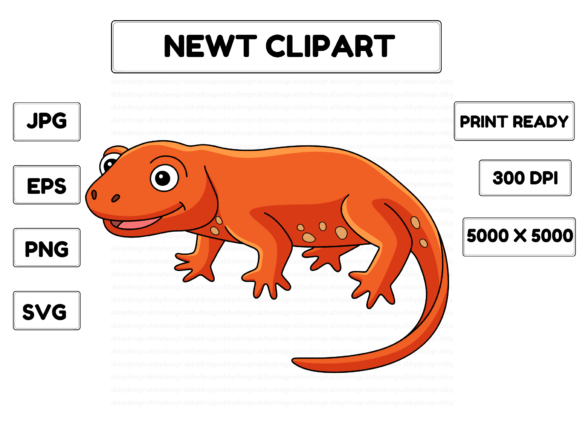
Newt Animal Colored Cartoon Illustration
A Cheerful, Hand-Drawn Vibe That Stitches With Personality
First glance at Newt Animal Colored Cartoon Illustration tells me this isn’t a generic clipart placeholder—it’s got warmth. The hand-drawn line quality, soft rounded shapes, and gentle color blocking suggest approachability and charm—ideal for baby embroidery, nursery decor, or boutique-style tote bag designs. It reads as friendly, not frantic; detailed enough to hold interest, but not so intricate that it’ll collapse under satin stitch or vanish on textured fabric. I immediately pictured it stitched onto a lightweight organic cotton tea towel for a local craft fair stall—small enough to feel special, expressive enough to spark conversation.
Where This Design Truly Shines in Real Embroidery Projects
Newt Animal Colored Cartoon Illustration fits naturally into projects where character matters more than photorealism: embroidered patches for kids’ backpacks, sweatshirt embroidery for eco-conscious apparel brands, or personalized baby onesies with matching burp cloths. Its clean silhouette and balanced negative space make it forgiving across hoop sizes—especially helpful when you’re juggling multiple small-batch orders for Etsy or a handmade shop. As a digital embroidery file, it translates well into applique design workflows too: the defined outline invites fabric layering without needing excessive underlay stitches.
I tested a mockup of this design on a medium-weight cotton twill apron—common for kitchen or gardening boutiques—and it held up beautifully. The newt’s body shape allowed smooth satin stitch curves without puckering, and its compact proportions (roughly 3–4 inches wide) meant no awkward rehooping mid-project. For holiday embroidery, think: a set of linen pillow covers featuring Newt Animal Colored Cartoon Illustration alongside mushrooms and ferns—whimsical but cohesive, instantly recognizable as part of a curated collection.
Places to Pause Before You Stitch
This design works best when matched thoughtfully to fabric and function. On stretchy fabrics like jersey or thin knits, use cutaway stabilizer and reduce stitch density slightly—those smooth curved outlines can distort if tension isn’t dialed in. Dark fabric? Confirm thread colors contrast clearly; the illustration’s light palette may need richer, deeper thread choices to retain definition. And while the cartoon style is forgiving, avoid cramming it into tiny hoops (under 3 inches) unless simplifying details first—the eyes and smile lines are sweet, but they’re not built for micro-stitching.
Curved surfaces like caps require extra attention: test placement on a scrap cap panel before committing. The newt’s horizontal orientation means it’ll sit cleanly on front panels, but watch how the tail curls near the seam—if your cap has a prominent crown ridge, consider rotating the design slightly to keep all features visible. Also, avoid dense fill stitch areas directly over seams or hems—stitching there risks bulk and stiffness in finished products like baby blankets or reversible pillow covers.
What It Adds to Your Finished Product—Beyond Just Looks
Using Newt Animal Colored Cartoon Illustration elevates perceived value. Customers browsing handmade product listings respond to authenticity—this isn’t AI-generated clutter. It signals care in curation, which builds trust, especially for Etsy sellers or small shop owners positioning themselves as thoughtful makers. On personalized gifts—say, a custom embroidered kitchen towel for a new parent—the newt feels intentional, joyful, and ageless. It doesn’t scream “trend” so much as “timeless detail,” which supports brand consistency across seasonal collections.
For commercial embroidery, its versatility helps: one design serves multiple categories—Illustrations for digital product sellers, Graphics for printable mockups, and a ready-to-stitch asset for craft business clients. That flexibility reduces design overhead without sacrificing uniqueness. And because it’s hand-drawn—not vector-perfect—it carries subtle imperfections that read as human-made, reinforcing the handmade presentation buyers seek.
Practical Designer Notes You’ll Want to Keep Handy
- Always test first: Run Newt Animal Colored Cartoon Illustration on scrap fabric matching your final project’s weight and weave—especially if using textured linen or terry cloth.
- Check thread color contrast: View the design in both black-and-white and color mockups to confirm legibility on light and dark backgrounds.
- Review stitch density: If converting from SVG or EPS to a machine embroidery file, verify fill stitch spacing—too tight risks stiffness; too loose loses definition.
- Confirm hoop size compatibility: While the illustration scales well, double-check your intended hoop dimensions before digitizing for complex garments like layered jackets or curved hats.
- Inspect small details: Zoom in on the eyes and mouth—do they translate cleanly into running or satin stitch? Adjust if needed for clarity at your target size.
- Stabilizer matters: Medium-weight tear-away works for stable wovens; switch to cutaway for knits or high-wear items like tote bags or aprons.
- Licensing check: Since this is a digital embroidery file sold as Graphics, confirm usage rights before selling finished embroidered items or bundling it into digital product kits.
Final Thought: A Quietly Confident Design Choice
Newt Animal Colored Cartoon Illustration won’t shout—but it doesn’t need to. It earns its place on a custom embroidered sweatshirt, a nursery mobile, or a set of holiday tea towels by being clear, kind in execution, and quietly memorable. For embroidery designers and creative entrepreneurs who prioritize substance over flash, it’s the kind of design that grows more valuable the more you use it—not because it’s flashy, but because it’s reliable, expressive, and genuinely suited to real hands-on making.