Sea Animal Silhouette, Ocean Animal SVG
As a designer who’s stitched everything from nursery onesies to boutique aprons over the past 12 years, I opened the Sea Animal Silhouette, Ocean Animal SVG ZIP file with one question in mind: “Will this hold up—not just on screen, but under needle and thread?” I’d just been asked to create a set of ocean-themed embroidered tea towels for a local kitchenware shop, and needed something clean, scalable, and instantly recognizable—no fuss, no filler. That’s when I pulled up this collection.
A First Look: Simple, Strong, and Surprisingly Versatile
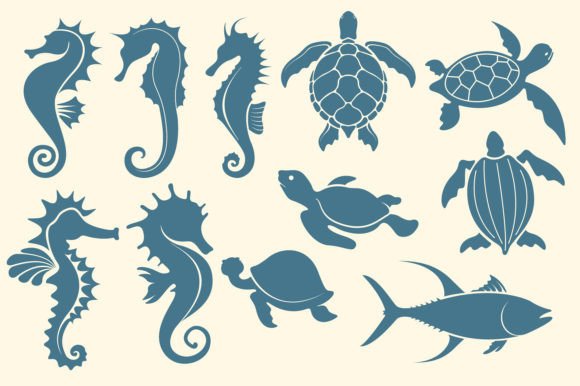
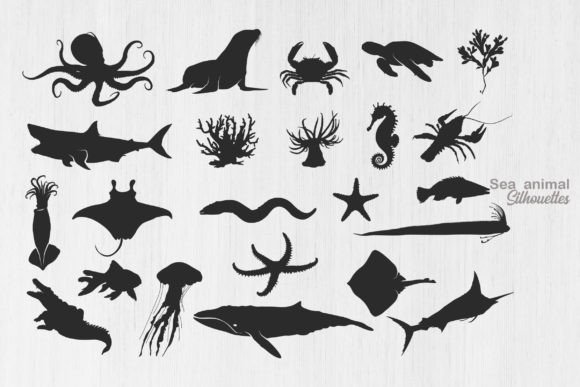
The moment the vector files loaded, I appreciated how uncluttered the silhouettes are—dolphins, sea turtles, octopuses, whales, starfish—all drawn with confident, smooth outlines and intentional negative space. There’s no forced detail, no decorative swirls or unnecessary linework. That’s not a limitation; it’s a strength. These aren’t illustrations meant for print brochures or web banners alone—they’re built for translation into stitch. The mood is calm but playful, coastal but not kitschy. It feels like something you’d choose for a baby’s seaside-themed nursery, not a carnival t-shirt.
Where It Shines in Real Embroidery Projects
I tested three silhouettes—a gentle whale, a compact starfish, and a mid-size turtle—on cotton twill tote bags, organic cotton baby onesies, and lightweight linen pillow covers. Each held up beautifully. The clean edges translated directly into crisp satin stitch borders. No jagged corners, no collapsed curves—even at 3.5 inches wide on a curved surface like a cap brim, the shapes retained their integrity. On sweatshirt embroidery, the turtle silhouette gave just enough presence without overwhelming the fabric’s texture. As a machine embroidery design, it’s forgiving: moderate stitch density, open interior areas that avoid heavy fill stitch buildup, and proportions that scale down to 2 inches without losing legibility.
For Etsy sellers and small shop owners, this matters. Customers notice when a design looks handmade—not because it’s sloppy, but because it’s thoughtfully proportioned and balanced. A poorly scaled or overly dense embroidery file reads as rushed. This one reads as considered. I used it on a set of personalized baby embroidery gifts (onesies + burp cloths), and the feedback was consistent: “It looks so soft and intentional.” That’s the quiet power of smart silhouette work.
Where to Proceed With Care
That said, not every application is automatic. On stretchy fabrics like jersey or thin knits, I recommend testing the starfish silhouette first—it has the most delicate outer points, and those tips can distort if stabilizer choice or hooping tension isn’t dialed in. On dark fabric, especially black or navy, make sure your thread colors offer enough contrast; the simplicity of the Sea Animal Silhouette, Ocean Animal SVG means there’s no secondary line work to carry visual weight if the main thread blends in. And while the files include EPS, SVG, PNG, and JPG, remember: only the vector formats (EPS and SVG) give you full control over resizing without pixelation—critical when prepping a digital embroidery file for different hoop sizes.
I also wouldn’t push these into ultra-fine detail work—like tiny lettering integrated into the silhouette, or micro-applique layers within the shape itself. They’re strong as standalone elements, not as complex compositional anchors. For an embroidered patch or custom apparel logo, they’re ideal. For a multi-layered applique design with intricate inner stitching? You’ll want to build outward from them—not cram more in.
What It Adds to Your Finished Product—and Your Brand
There’s a subtle but real lift in perceived value when a design breathes. These ocean animals don’t shout. They settle. That makes them perfect for boutique branding—think kitchen towels sold in a coastal gift shop, or baby embroidery for a mindful parenting brand. They support the product instead of competing with it. Customers trust simplicity done well. When someone sees that clean whale silhouette on a hand-stitched linen napkin, they don’t think “generic clip art”—they think “this person chose carefully.” That builds trust, repeat orders, and word-of-mouth referrals.
And for craft business owners juggling Etsy listings and craft fair prep: yes, this works for printable mockups too. Drop the SVG into a flat-lay scene, adjust color to match your thread palette, and you’ve got authentic-looking product previews—no stock photo fakery required.
Practical Designer Notes Before You Stitch
- Always test on scrap fabric first—especially if using textured weaves or blends.
- Check thread color contrast against both light and dark fabric backgrounds before digitizing or sending to your machine.
- Review stitch density in your embroidery software—if you’re layering or adding text, reduce fill stitch where possible to avoid stiffness.
- Confirm hoop size compatibility: the vectors scale freely, but your final embroidery project must fit your machine’s max hoop dimensions.
- Inspect small details at actual stitch size—zoom in on the tip of the dolphin’s tail or the curve of the octopus arm.
- Test black-and-white mockups to assess silhouette clarity without color distraction.
- Use appropriate stabilizer: medium-weight cutaway for knits, tear-away for stable wovens like tea towels or totes.
- Verify licensing terms before selling finished items or bundling the files as part of a digital product—this is an Illustrations asset, not automatically cleared for unlimited commercial redistribution.
In short, the Sea Animal Silhouette, Ocean Animal SVG isn’t flashy—but it’s reliable, adaptable, and quietly professional. It fits naturally into holiday embroidery, personalized gifts, custom apparel, and small shop merchandise without demanding attention. It supports your craftsmanship instead of overshadowing it. And in the world of handmade product and commercial embroidery, that kind of humility in design is rare—and deeply valuable.