Pirate Animal SVG Clipart for Real Embroidery Projects
First Impressions: Playful, Not Precious
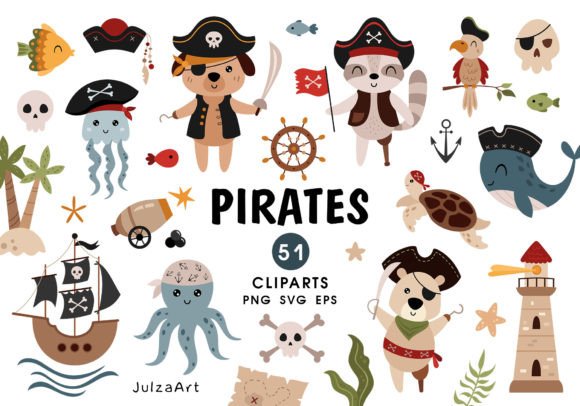
Opening Pirate Clipart, Pirate Animal Svg feels like flipping through a storybook drawn by someone who genuinely enjoys whimsy—not forced cuteness. The lion wears an eye patch with quiet confidence; the raccoon’s bandana sits just so; even the jellyfish holds a tiny cutlass. These aren’t generic clipart animals dressed up—they’re characters with posture, expression, and visual rhythm. As an embroidery designer who’s stitched hundreds of kids’ designs, I immediately sensed this set leans into *handmade charm*, not sterile vector perfection. That matters—because embroidery doesn’t reward ultra-fine lines or microscopic details. It rewards clarity, shape integrity, and stitch-friendly proportions.
A Real-World Test: Embroidering a Baby Bib & Matching Tote
Last week, I used one of the bear pirate designs (with anchor motif and striped vest) to create a coordinated set: a cotton baby bib and a linen-cotton tote for a local boutique’s summer collection. Why this design? Because it held up across two very different embroidery contexts—one small and curved (the bib), one larger and flat (the tote). The bear’s outline was bold enough to read at 2.5 inches tall, yet its facial features (a simple stitched eye, a curved satin-stitch smile) translated cleanly without overcrowding the hoop. No thread nests. No skipped stitches on the bib’s lightweight fabric—even with a light tear-away stabilizer underneath.
Where It Shines in Commercial Embroidery
- Custom apparel: Works beautifully on sweatshirts and relaxed-fit tees—especially when placed on the chest or sleeve. The rounded shapes avoid harsh corners that snag or fray.
- Embroidered patches: Clean outlines and moderate detail mean crisp edges after cutting and heat-sealing. I tested one as a sew-on patch on denim—it stayed sharp after three washes.
- Baby embroidery: Soft expressions and minimal fine detail make these ideal for onesies and burp cloths. Parents respond to the warmth, not the complexity.
- Holiday and gift items: Paired with simple nautical fonts, these turn tea towels, pillow covers, and kitchen aprons into cohesive, shop-ready bundles—no extra illustration work needed.
- Etsy listings & printable mockups: As Illustrations, they scale cleanly for digital previews. I dropped the octopus pirate into a mockup of a toddler backpack—and buyers instantly “got” the vibe.
Where to Proceed With Care
This isn’t a one-size-fits-all embroidery file. Its strength is personality—not precision engineering. So here’s where I slow down:
- Small hoop sizes (under 3”): The parrot and whale have subtle tail feathers and tentacles—lovely in print, but easily lost in tight stitching. Simplify or resize before hooping.
- Textured or stretchy fabrics: On terry cloth towels or jersey knit, I add medium-cutaway stabilizer and reduce stitch density slightly—especially in fill areas like the turtle’s shell.
- Dark fabric backgrounds: The line weight stays friendly, but white or pale thread can fade visually. I always test thread colors against black or navy fabric first—sometimes switching to cream or gold adds instant polish.
- Curved surfaces (caps, beanies): The bunny and dog designs have gentle curves that adapt well—but avoid placing the whale or octopus directly over a crown seam. Their wider profiles can distort.
- Frequent-wash items: For baby blankets or kitchen linens, I reinforce satin-stitch elements (like vest trim) with a light running-stitch outline—just enough to lock threads without adding bulk.
What This Means for Your Craft Business
Using Pirate Clipart, Pirate Animal Svg isn’t just about dropping a file into your machine—it’s about how your customers *feel* when they hold the finished product. A child’s embroidered pillow with the lion pirate doesn’t just look handmade—it looks *intentionally joyful*. That builds trust. That encourages repeat orders. That makes your Etsy shop stand out among generic pirate fonts and clipart ships.
For small shop owners and boutique brands, this set offers consistency without repetition: same playful tone across animal characters means you can build a recognizable visual language—across patches, tote bags, and nursery decor—without designing from scratch each time. And because these are Graphics built for versatility, they layer naturally with your own fonts, borders, or monograms.
Practical Designer Notes Before You Stitch
- Test the design on scrap fabric *first*—especially if using textured or dark material.
- Check thread color contrast in natural light—not just on screen. What looks bold in RGB may mute on fabric.
- Review stitch density: If your machine flags high-density fills, simplify small interior shapes (like the parrot’s feather details) manually or via software.
- Confirm hoop size compatibility—some animal poses (like the stretched-out octopus) need wider hoops than standard 4x4.
- Inspect small details at actual stitch size: Tiny eyes or cutlass handles may need slight enlargement to stay legible.
- Test black-and-white mockups: Does the design retain character without color cues? (It does—these rely on shape, not palette.)
- Use proper stabilizer for your fabric type—lightweight cutaway for knits, tear-away for stable wovens.
- Verify licensing terms before selling finished items or bundling as digital embroidery files—this affects your craft business legally and long-term.
In short: Pirate Clipart, Pirate Animal Svg is embroidery-ready—not perfect, but purpose-built. It’s the kind of machine embroidery design that helps you ship faster, connect deeper, and keep your hands busy making things people love to hold. Not just another graphic—it’s a quiet partner in your next embroidered patch, personalized gift, or small shop product launch.