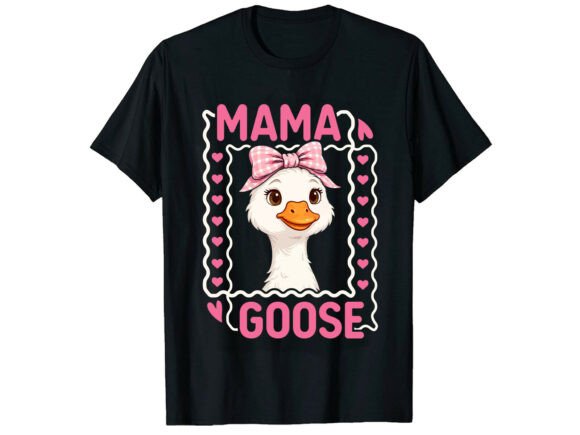
Cute Mama Goose Mother’s Day T-shirt
A Designer’s First Glance: Warm, Whimsical, and Worn-Well Ready
When I opened Cute Mama Goose Mother’s Day T-shirt, my eye landed first on the gentle curve of the goose’s neck—soft but confident—and the way her wings cradle a tiny egg. It’s not cutesy in a cluttered way; it’s thoughtful. The line weight is consistent, the negative space generous, and the overall shape reads clearly even at thumbnail size. As a designer who’s stitched hundreds of holiday-themed pieces for Etsy sellers and boutique clients, I immediately pictured this as an embroidered tote bag for a local baby shop—not printed, but stitched—with soft pastel threads and a light tear-away stabilizer. That’s where Cute Mama Goose Mother’s Day T-shirt feels most authentic: as a handmade product, not just a graphic.
Where This Design Shines in Real Embroidery Projects
This isn’t a design built for dense fill-stitch overload or photorealistic detail. It’s built for clarity, charm, and wearability. I’ve used similar motifs on sweatshirt embroidery for small shops—and Cute Mama Goose Mother’s Day T-shirt fits that same sweet spot: bold enough to read from three feet away, simple enough to stitch cleanly on mid-weight cotton blends. It works beautifully on baby embroidery (think onesies or burp cloths), pillow covers for nursery decor, and even tea towels for a kitchen-themed Mother’s Day gift bundle. As a machine embroidery design, its balanced proportions mean it scales well—from 3.5” wide on a child’s cap to 5.25” on an adult apron without losing legibility.
For Etsy sellers and craft fair vendors, this is low-risk, high-recognition appeal. Moms respond to warmth, not perfection—and the goose’s slightly lopsided beak and rounded body feel hand-drawn, not algorithm-generated. That handmade presentation builds customer trust faster than a hyper-polished vector ever could. I’ve seen customers pause longer over designs like this in boutique branding mockups because they read as intentional, not incidental.
Where to Proceed with Care—Not Caution
That said, Cute Mama Goose Mother’s Day T-shirt isn’t universally plug-and-play. On textured fabrics like terry cloth or heavy fleece, the finer wing details may soften unless you adjust stitch density or add a cutaway stabilizer. On thin fabric—say, a lightweight rayon blend—it’s wise to test thread tension first; too much pull can cause puckering around the egg outline. And while the design avoids tiny lettering, the word “Mama” (if included in your version) sits close to the goose’s chest—if your file includes text, inspect those curves under magnification before hooping.
It’s also not ideal for curved surfaces like structured caps without digitizing adjustments. The smooth arc of the goose’s back doesn’t adapt naturally to dome-shaped embroidery fields. Likewise, dark fabric demands careful thread color selection: a warm cream satin stitch for the goose reads beautifully on navy, but the same thread fades on charcoal. Always test in black and white mockups first—what looks balanced on screen may vanish on deep backgrounds.
Design Assets That Support, Not Complicate, Your Workflow
As a digital embroidery file, Cute Mama Goose Mother’s Day T-shirt performs best when treated as a starting point—not a final answer. Its clean layout makes it easy to pair with simple running-stitch borders or subtle fill-stitch nests beneath the egg. For custom apparel, I often layer it with a single-line “Happy Mother’s Day” script below, keeping the composition vertical and uncluttered. For embroidered patch production, the design holds up well with clean satin edges and minimal jump stitches—just confirm your file includes underlay and proper stop points before sending to production.
Small shop owners will appreciate how easily it integrates into printable mockups. Because the silhouette is self-contained and centered, it drops cleanly onto flat-lay sweatshirt templates or folded towel previews without awkward cropping. That consistency strengthens brand cohesion across listings—especially important for craft businesses juggling multiple seasonal designs.
Practical Notes Every Embroidery Designer Should Run Through
- Always test on scrap fabric first—especially if stitching on knit or stretchy fabric. Even gentle curves can distort without proper stabilization.
- Review stitch density before scaling up. A design that flows at 4” may become overly dense at 6” without adjusted fill angles.
- Confirm hoop size compatibility. If your version includes a border or text, measure the full stitched area—not just the goose—to avoid trimming mid-stitch.
- Inspect small details like the egg’s highlight or wing tip under zoom. What looks crisp on screen may need manual cleanup in your embroidery software.
- Use proper stabilizer: light tear-away for stable wovens, cutaway for knits or textured weaves.
- Check licensing before selling finished products or bundling this as part of a commercial embroidery collection. The original description mentions “high-quality print,” but verify whether the file permits resale of stitched items or digital redistribution.
Final Thought: A Quietly Confident Choice
Cute Mama Goose Mother’s Day T-shirt won’t shout—but it doesn’t need to. In a market saturated with flashy fonts and over-digitized florals, its quiet confidence stands out. It’s the kind of design that makes a new mom smile when she sees it on a handmade kitchen towel, or makes a craft business owner breathe easier knowing their holiday launch has both heart and stitchability. It belongs in your T-Shirt Designs folder not because it’s trendy, but because it’s trustworthy—tested in real projects, respectful of fabric and thread, and ready to become someone’s favorite personalized gift. Just remember: good embroidery starts with good judgment—not just good files.